Bitcoin

Immersion Cooling Drives Server Power Densities To Insane New Heights (datacenterfrontier.com) 80

1sockchuck writes: By immersing IT equipment in liquid coolant, a new data center is reaching extreme power densities of 250 kW per enclosure. At 40 megawatts, the data center is also taking immersion cooling to an entirely new scale, building on a much smaller proof-of-concept from a Hong Kong skyscraper. The facility is being built by Bitcoin specialist BitFury and reflects how the harsh economics of industrial mining have prompted cryptocurrency firms to focus on data center design to cut costs and boost power. But this type of radical energy efficiency may soon be key to America's effort to build an exascale computer and the increasingly extreme data-crunching requirements for cloud and analytics.
Emulation (Games)

MAME Emulating a Sonic the Hedgehog Popcorn Machine (polygon.com) 33

New submitter AmericaCounterweight writes: Polygon is reporting that the MAME development team has unearthed and emulated one of the most obscure pieces of Sonic heritage: a popcorn machine. MAME developer David Haywood reports that contributors "purchased the PCB for another novelty Sonic item, this time a SegaSonic Popcorn Shop, a popcorn dispenser machine with a video display. It runs on the Sega C2 board (Genesis type hardware)." This follows news from earlier this year that the MAME team would be switching to a true Open Source license for the project and concentrating on more than just arcade games. MAME project coordinator Miodrag Milanovic also recently appeared at the BalCCon2k15 event to speak about MAME, the current direction of the project, and software preservation.
Education

Official, Customized Raspberry Pi Versions Coming Soon (linuxgizmos.com) 93

DeviceGuru writes: The immensely popular Raspberry Pi will soon be offered in customized versions, through an exclusive arrangement between Raspberry Pi Trading and Element14. According to the companies' announcement, Element14 will provide design and manufacturing services to OEM customers to create 'bespoke designs' based upon the Raspberry Pi technology platform. That's weird U.K. English for saying that contracts for creating customized Raspberry Pi SBCs will entail substantial NRE fees and 3,000 to 5,000 unit orders, depending on the nature of the customization. The tweaked Pi's are likely to have revised board layouts, additional or alternative functions, interfaces, connectors, and memory configurations, and more. A handful of unsanctioned Raspberry Pi knock-offs have already appeared over the past couple of years, including various Orange Pi and Banana Pi flavors, which certainly didn't involve any 'bespeaking.' More info is at Element14's CustomPi page.
Power

Morocco's Solar Power Mega-Project (theguardian.com) 102

An anonymous reader writes: Morocco, located along the northwestern African coast, is in prime position to take advantage of solar technology, and they've committed to one of the biggest such projects in the world. The city of Ouarzazate will host "a complex of four linked solar mega-plants that, alongside hydro and wind, will help provide nearly half of Morocco's electricity from renewables by 2020." It will be the largest concentrated solar power plant in the world. "The mirror technology it uses is less widespread and more expensive than the photovoltaic panels that are now familiar on roofs the world over, but it will have the advantage of being able to continue producing power even after the sun goes down." The first phase of the project, called Noor 1, comprises 500,000 solar mirrors that track the sun throughout the day, with a maximum capacity of 160MW. When the full project finishes, it will be able to generate up to 580MW. "Each parabolic mirror is 12 meters high and focused on a steel pipeline carrying a 'heat transfer solution' (HTF) that is warmed to 393C as it snakes along the trough before coiling into a heat engine. There, it is mixed with water to create steam that turns energy-generating turbines."
Programming

ARM64 Vs ARM32 -- What's Different For Linux Programmers? (edn.com) 102

New submitter DebugN writes: When ARM introduced 64-bit support to its architecture, it aimed for Linux application compatibility with prior 32-bit software on its architecture. But for Linux programmers, there remain some significant differences that can affect code behavior. If you are a Linux programmer working with — or will soon be working with — 64-bit, you might want to know what those differences are, and this useful EDN article says it all.
Power

First New US Nuclear Reactor In Two Decades Gets Permission To Begin Fueling (ieee.org) 167

An anonymous reader writes: The Tennessee Valley Authority's Watts Bar nuclear power plant began construction in 1973. The plant's first reactor was completed in 1996, and it began operation. Work on the second reactor paused in 1988, and only resumed in 2007. That reactor is now complete — the first newly-operational Generation II reactor since the 1990s. The new reactor has been granted an operational license, and it will soon begin fueling. While the Gen II reactors aren't unsafe, they're much less safe than the Gen III AP1000s. "Compared to a Westinghouse Gen II PWR, the AP1000 contains 50 percent fewer safety-related valves, 35 percent fewer pumps, 80 percent less safety-related piping, 85 percent less control cabling, and 45 percent less seismic building volume. ... If an accident happens, the AP1000 will shut itself down without needing any human intervention (or even electrical power) within the first 72 hours."
Power

A Tower of Molten Salt Will Deliver Solar Power After Sunset (ieee.org) 139

schwit1 sends this report from IEEE Spectrum: Solar power projects intended to turn solar heat into steam to generate electricity have struggled to compete amid tumbling prices for solar energy from solid-state photovoltaic (PV) panels. But the first commercial-scale implementation of an innovative solar thermal design could turn the tide. Engineered from the ground up to store some of its solar energy, the 110-megawatt plant is nearing completion in the Crescent Dunes near Tonopah, Nev. It aims to simultaneously produce the cheapest solar thermal power and to dispatch that power for up to 10 hours after the setting sun has idled photovoltaics. ... [The system] heats a molten mixture of nitrate salts that can be stored in insulated tanks and withdrawn on demand to run the plant’s steam generators and turbine when electricity is most valuable. ... Eliminating the heat exchange between oil and salts trims energy storage losses from about 7 percent to just 2 percent. The tower also heats its molten salt to 566 degrees C, whereas oil-based plants top out at 400 degrees C.
Botnet

Compromised CCTV and NAS Devices Found Participating In DDoS Attacks (incapsula.com) 64

chicksdaddy writes: The parade of horribles continues on the Internet of Things, with a report from the security firm Incapsula that its researchers discovered compromised closed circuit cameras as well as home network attached storage (NAS) devices participating in denial of service attacks. The compromised machines included a CCTV at a local mall, just a couple minutes from the Incapsula headquarters.

According to the report, Incapsula discovered the infections as part of an investigation into a distributed denial of service attack on what it described as a "rarely-used asset" at a "large cloud service." The attack used a network of 900 compromised cameras to create a flood of HTTP GET requests, at a rate of around 20,000 requests per second, to try to disable the cloud-based server. The cameras were running the same operating system: embedded Linux with BusyBox, which is a collection of Unix utilities designed for resource-constrained endpoints.

The malware in question was a variant of a self-replicating program known as Lightaidra, which targets systems running BusyBox and exploits vulnerable Telnet/SSH services using so-called "brute force dictionary attacks" (aka "password guessing"). Given that many Internet connected devices simply use the default administrator credentials when deployed, calling it a "brute force" attack is probably a stretch.

Cellphones

Hands-On With the Fairphone 2 Modular Android Smartphone (arstechnica.com) 107

An anonymous reader writes: In just a couple of months, the world's first consumer-ready modular smartphone will start shipping. It's called the Fairphone 2, and it will run Android 5.1. Ars Technica got hands-on time with the device, and they say it works surprisingly well. It's a bit thicker than most modern phones, but that's the trade-off for being able to swap out components. "The smartphone consists of seven major building blocks: the back cover, removable battery, display assembly, main chassis, receiver module, rear camera module, and speaker module. Positioned this way, the components that break most often, like the screen, are isolated for better repairability. In addition to swappable blocks, you can even change things inside the modules: for example, a mic or a speaker. They are press-fit, not glued, and can be extracted with simple tools."

Assembly and disassembly is pretty straightforward, as well: "The modules are held together by Phillips screws marked with blue circles. All screws are the same, so you won't have to remember which one goes where. It's quite hard to make a mistake in the assembling process, however Fairphone promises to release additional manuals and video instructions in collaboration with iFixit." The company also thinks it's important to get the phone's materials and components from ethical sources.

Power

The Bizarre Reactor Scientists Hope Will Save Fusion Research (sciencemag.org) 223

sciencehabit writes: In a gleaming research lab in Germany's northeastern corner, researchers are preparing to switch on a fusion device called a stellarator, the largest ever built. The €1-billion machine, known as Wendelstein 7-X looks a bit like Han Solo's Millennium Falcon, towed in for repairs after a run-in with the Imperial fleet. Stellarators have long been dark horses in fusion energy research but the Dali-esque devices have many attributes that could make them much better prospects for a commercial fusion power plant than the more popular tokamaks: Once started, stellarators naturally purr along in a steady state and they are not prone to the potentially metal-bending magnetic disruptions that plague tokamaks. Unfortunately they are devilishly hard to build.
Data Storage

Samsung 950 Pro Brings NVMe To M.2, Over 2.5GB/s 36

Vigile writes: Samsung just released its first non-OEM, consumer level NVMe enabled SSD, the 950 Pro series. This drive will ship in an M.2 form factor rather than a 2.5-in drive size that is the standard for users today, allowing installation into notebooks, small form factor PCs and desktop PCs that have at least one M.2 slot on-board. It peaks at 512GB capacity today but Samsung promises a 1TB version using 48-layer VNAND in 2016. The NVMe protocol allows much better performance directly over the PCIe bus without the overhead of the AHCI protocol used in hard drives and previous SSDs. PC Perspective's review has performance breaking the 2.5GB/s read speed level while also introducing an entirely new type of performance evaluation for SSDs centered around latency distribution of IOs. By measuring how long each IO takes, rather than reporting only an average, the performance of an SSD can be determined on a per-workflow basis and drives can be compared in an entirely new light. There is a lot of detail on to be read over and digested but again the new NVMe Samsung 950 Pro impresses. Hot Hardware takes a similarly data-dump-heavy look at the same drive.
Space

Looking At the Hardware and Software of JAXA's Hayabusa-2 (imgtec.com) 16

alexvoica writes: After interviewing the NASA New Horizons team (if you've missed the original story on Slashdot, you can find it here), it's time to get the views of another famous space agency (JAXA) on spacecraft hardware and software. This interview focuses mainly on Hayabusa-2, the world's first round-trip mission to a C-type asteroid. The main goal of the Hayabusa-2 mission is to visit the near-Earth asteroid 1999 JU3, conduct on site science experiments, collect soil samples from the asteroid, and return them back to Earth. 1999 JU3 is a near-Earth C-type asteroid, and is believed to contain organic and hydrated minerals. The contact at JAXA replying to these questions is Associate Professor Yuichi Tsuda, Ph.D the project manager for Hayabusa-2. Dr. Tsuda works for the Department of Space Flight Systems at the Institute of Space and Astronautical Science (ISAS) and at JAXA.
Data Storage

Not Just Paris: Community Activists Target Data Centers (datacenterfrontier.com) 151

1sockchuck writes: This week's case in which a Paris data center lost its license isn't an isolated incident, but the latest in a series of disputes in which community groups have fought data center projects, citing objections to generators or power lines. Data center site selection is often a secretive process, with cloud builders using codenames to cloak their identity. Community groups are using social media, blogs, research and media outreach to bring public attention to the process and voice their concerns. Protests from a Delaware group led to the cancellation of a data center project that planned to build a cogeneration plant. In Virginia, a coalition has organized to oppose a power line for an Amazon Web Services data center. Everyone wants their Internet, just not in their backyard.
Medicine

3D-Printed Teeth Can Kill 99% of Dental Bacteria (thestack.com) 120

An anonymous reader writes: A research group in the Netherlands has developed a new plastic resin that can destroy most dental bacteria when used for the creation of dental appliances via 3D-printing. The process involves embedding antimicrobial quaternary ammonium salts inside extant dental resin polymers. Since the salts are positively charged, these disrupt negatively-charged bacterial membranes. The process is also being mooted for use in the creation of knee arthroplasties, and in the manufacture of children's toys and food packaging.
Data Storage

Samsung Demos PCIe NVMe SSD At 5.6 GB Per Second, 1 Million IOPS (hothardware.com) 88

MojoKid writes: Samsung decided to show off their latest SSD wares at Dell World 2015 with two storage products that are sure to impress data center folks. Up and running on display, Samsung showcased their PM1725 drive, which is a half-height, half-length (HHHL) NVMe SSD that will be one of the fastest on the market when it ships later this year. It sports transfer speeds of 5500MB/sec for sequential reads and 1800MB/s for writes. Samsung had the drive running in a server with Iometer fired up and pushing in excess of 5.6GB/sec. The PM1725 also is rated for random reads up to 1,000,000 IOPS and random writes of 120,000 IOPS. The top of the line 6.4TB SSD is rated to handle 32TB of writes per day with a 5-year warranty.
Japan

Should Japan Restart More Nuclear Power Plants? (thebulletin.org) 313

Lasrick writes: Seth Baum, executive director of the Global Catastrophic Risk Institute, writes in the Bulletin of the Atomic Scientists that Japan should restart more of its nuclear reactors (the Sendai nuclear plant was restarted in August). The reason is simple, writes Baum: "Japan is now building 45 new coal power plants, but if it turned its nuclear power plants back on... it could cut coal consumption in half. And coal poses more health and climate change dangers than nuclear power."
Microsoft

Microsoft Surface Pro 4 and Surface Book Reviews 152

An anonymous reader writes: Anandtech posted reviews of the Microsoft Surface Pro 4 and the Microsoft Surface Book today. They write: "After launching Surface Pro 3 with Haswell in 2014, Microsoft — like so many manufacturers — opted to skip the short-lived Broadwell generation of Intel CPUs in favor of making the larger jump to Skylake. Skylake brings with it notable increases in both CPU and GPU performance, particularly in the mobile space thanks to a series of optimizations and the use of Intel's leading 14nm manufacturing node," about the Pro 4 and with regards to the Book, "The basis of the Surface Book is that it is designed to be used as a laptop most of the time, but the display can be removed as a Clipboard for use with the pen. The Surface Book is certainly not the first device to do this, but it does some things in new ways that are pretty interesting."
Data Storage

Noise Protests Close Paris Data Center (datacenterdynamics.com) 157

judgecorp writes: Data center firm Interxion has been ordered to close a data center in Paris over protests from residents. The local group complained about noise and large quantities of stored diesel fuel at the site, saying that the consultation which allowed it to open in 2012 was flawed. Now Interxion's license has been revoked and it has two months to appeal
Data Storage

Western Digital To Buy SanDisk (reuters.com) 99

An anonymous reader writes: Reuters reports that Western Digital will buy SanDisk in a deal worth roughly $19 billion. In a press release, WD said, "The combination is the next step in the transformation of Western Digital into a storage solutions company with global scale, extensive product and technology assets, and deep expertise in non-volatile memory (NVM)." SanDisk has been in business since 1988, and primarily "manufactures flash memory chips and other digital storage for personal computers, data centers and consumer electronics, including smartphones and tablets." They have over 8,000 employees, compared to WD's ~76,000. This follows another major transaction in the storage market, when Dell bought EMC last week.
United States

'Clock Kid' Ahmed Mohamed and His Family To Leave US, Move To Qatar 621

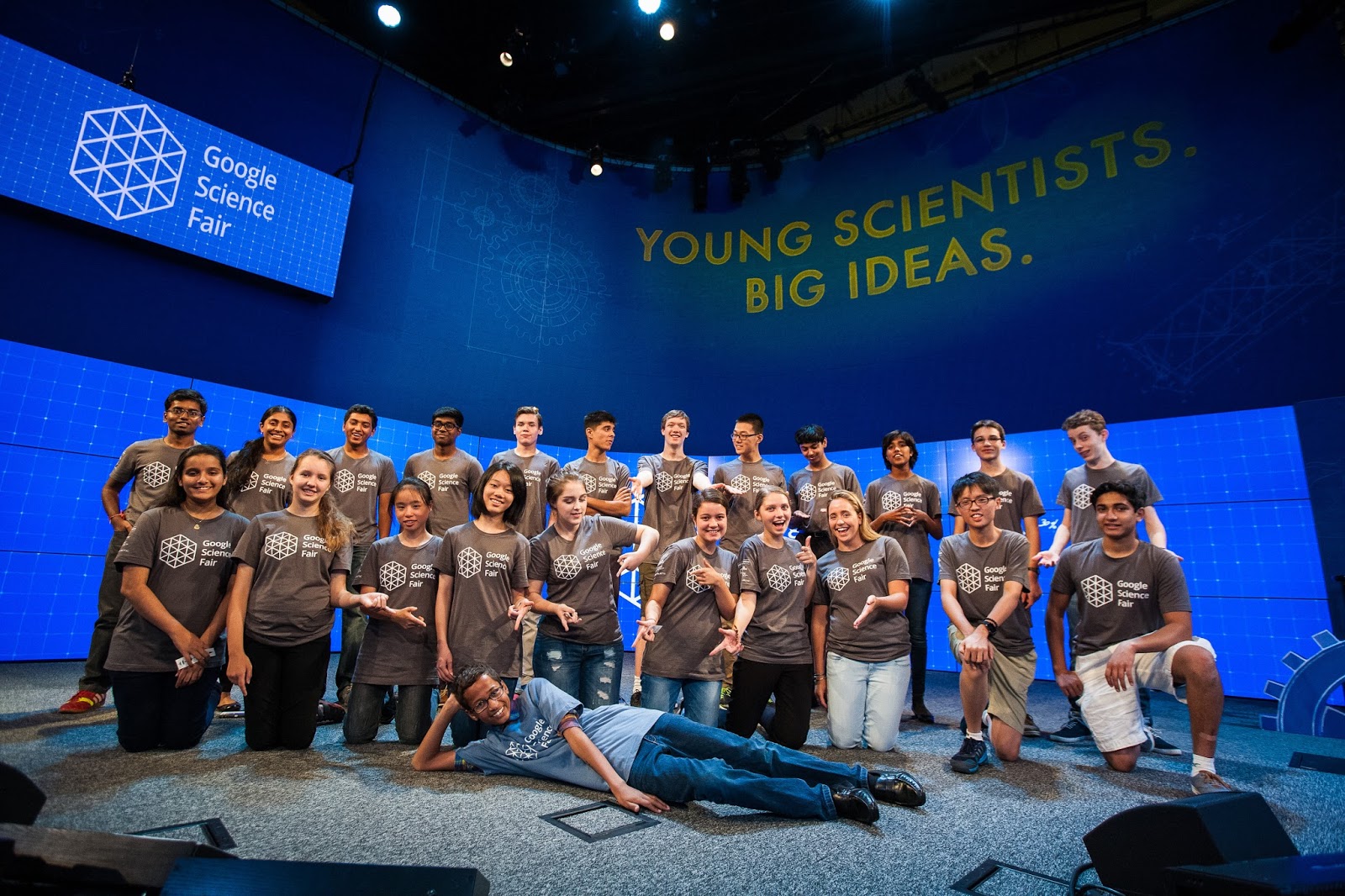
theodp writes: The curious case of Ahmed Mohamed, the 9th grader who was cuffed for scaring school officials with what turned out to be a repackaged digital clock, has taken yet another twist with news on Tuesday that the 'Clock Kid' and his family will move to Qatar. Less than 24 hours after Ahmed met President Obama at the White House, the family issued a news release saying, "After careful consideration of all the generous offers received, we would like to announce that we have accepted a kind offer from Qatar Foundation for Education, Science and Community Development (QF) for Ahmed to join the prestigious QF Young Innovators Program, which reflects the organization's on-going dedication to empowering young people and fostering a culture of innovation and creativity." Prior to the announcement, some in the press sensed something was amiss when the President seemed to give Ahmed the cold shoulder on Monday after personally inviting Ahmed to the White House for "Astronomy Night." Last month, Ahmed enjoyed a decidedly warmer welcome at Google, where he was literally put front and center before the Google Science Fair winners (including Grand Prize winner Olivia Hallisey, who came up with a novel way to detect Ebola), and enjoyed a meet-and-greet with Sergey Brin.

Slashdot Top Deals